

ADHD Meds Not Working? 5 Common Reasons and How to Fix Your Routine
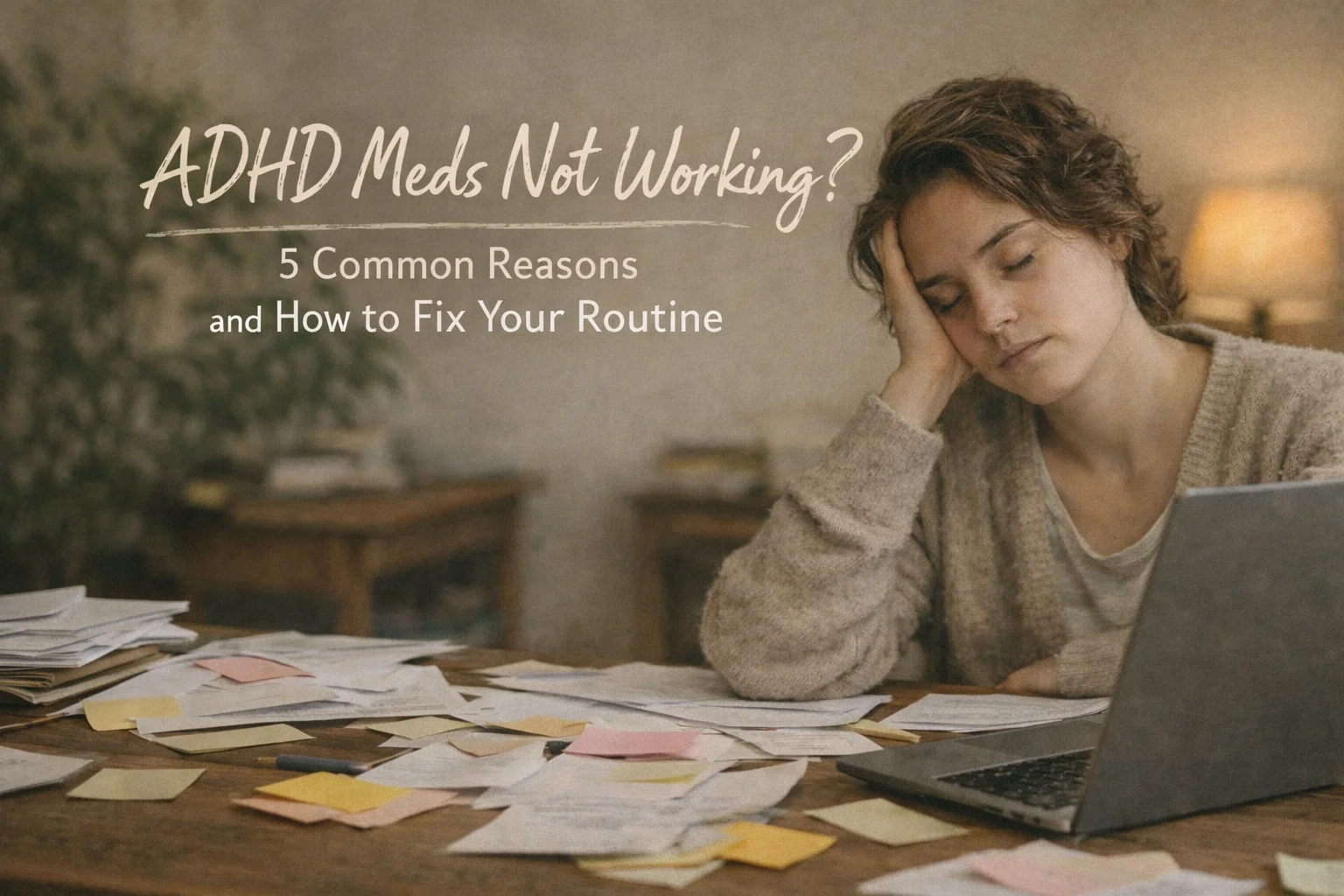
You sit at your desk. You took your medication an hour ago. You expect the fog to lift and the "to-do" list to finally feel manageable. But instead, you feel stuck. You might feel jittery, or perhaps you feel absolutely nothing at all.
You aren't failing. Your brain isn't "broken" beyond repair. Medication management is a journey, not a destination. ❤️
When ADHD medication doesn't deliver the results you deserve, it is usually a sign that your routine or your plan needs a gentle recalibration. You deserve a life where your brain works with you, not against you.
Here are the five most common reasons your ADHD meds might feel like they aren't working and exactly how you can take back control.
1. Your Dosage Isn't Your "Goldilocks" Zone
Finding the right dose is a science. It is also an art.
ADHD medication is highly individualized. What works for a friend or a family member might not work for you. Your metabolism, body chemistry, and the severity of your symptoms all play a role in how you process these tools.
If your dose is too low, you won't feel the symptom relief you need to stay on track. If it is too high, you might feel "zombified" or overly anxious, which masks any actual benefits.
You need the dose that is just right for you. ❤️
How to fix it:
Keep a daily log of how you feel. Note when the focus kicks in and when it fades. Share these details during your telehealth check-ins. We use this data to fine-tune your treatment plan with precision.

2. The Lifestyle Interference
Your medication does not work in a vacuum. It requires a solid foundation to do its job effectively.
If you are running on four hours of sleep, your brain is already at a deficit. Medication can only do so much to pull you out of a sleep-deprived fog. Similarly, hydration and nutrition are non-negotiable.
Many ADHD medications are processed differently depending on what you eat. For example, high levels of Vitamin C or acidic drinks (like orange juice or soda) taken at the same time as your stimulant meds can actually prevent your body from absorbing the medication.
How to fix it:
Prioritize Protein: Eat a high-protein breakfast when you take your medication. Protein helps with neurotransmitter production.
Hydrate Often: Set an alarm to drink water every hour.
Check Your Timing: Avoid acidic juices for an hour before and after taking your dose.
3. Expectations vs. Reality
It is a common myth that ADHD medication will give you the "motivation" to do things you hate.
Medication provides the bridge to focus, but it does not choose the direction. If you take your medication and immediately start scrolling on your phone, you will simply become very focused on scrolling.
The medication handles the chemistry, but you still handle the choices. ❤️
How to fix it:
Use a "launchpad" routine. Before your medication kicks in, decide on your top three priorities for the day. Sit down at your workspace before the meds take effect so that when the focus arrives, you are already in the right place. You are the driver; the medication is just the fuel.

4. The "Poop-Out" Effect or Tolerance
Sometimes, a routine that worked for months suddenly stops performing. This is often called the "poop-out" effect.
Your body is dynamic. Changes in your stress levels, hormonal shifts (especially for those who menstruate), or even changes in your physical activity can alter how you respond to your medication. In some cases, your brain develops a natural tolerance, and we simply need to adjust the strategy.
How to fix it:
Do not suffer in silence. If you notice a decline in effectiveness for more than two weeks, it is time for a professional review. Small adjustments can make a world of difference. You are worth the effort of a recalibration.
5. Co-occurring Conditions Are Masking Progress
ADHD rarely travels alone. Often, it brings friends like anxiety or depression.
If your anxiety is high, it can mimic ADHD symptoms like restlessness and lack of concentration. If your ADHD medication is working but your depression is untreated, you might still feel a total lack of motivation.
You have to treat the whole person, not just one label. ❤️
How to fix it:
During your first psychiatric appointment, we screen for these overlapping conditions to ensure your treatment plan covers every base.

How to Build a Routine That Works
Consistency is your greatest ally. To get the most out of your treatment, you need a routine that supports your brain's unique rhythm.
Track Everything: Use an app or a simple notebook. Note your sleep, your mood, and your focus levels.
Habit Stacking: Take your medication at the same time every day by "stacking" it with an existing habit, like brushing your teeth or making coffee.
Regular Check-ins: ADHD management is not a "one and done" situation. Use telehealth for convenient, stress-free follow-ups. You can chat from the comfort of your own home, making it easier to stay consistent with your care.
You Are Not Alone in This
Navigating ADHD is a journey of self-discovery. You are doing the work, and that is something to be proud of.
If you feel like your current plan isn't hitting the mark, let’s talk. We specialize in compassionate, evidence-based medication management that prioritizes your lifestyle and your goals.
You deserve to feel clear. You deserve to feel capable.
Ready to find your focus?
Get started by booking a consultation today. We are here to help you build a legacy of mental wellness. ❤️